Spices are an essential part of the food industry and daily cooking. They add flavour, aroma, colour, and character to a wide variety of food products. From whole spices such as turmeric, coriander, cumin, and black pepper to finely ground masalas and customised seasoning blends, modern spice production involves a series of carefully managed processing stages.
Woxn Packaging offers suitable machinery solutions for businesses involved in spice processing and packaging. The quality of spices depends not only on the raw materials but also on the cleaning, drying, grinding, blending, and packaging processes. Proper processing equipment can help manufacturers maintain hygiene, improve productivity, and produce spice powders with better consistency.
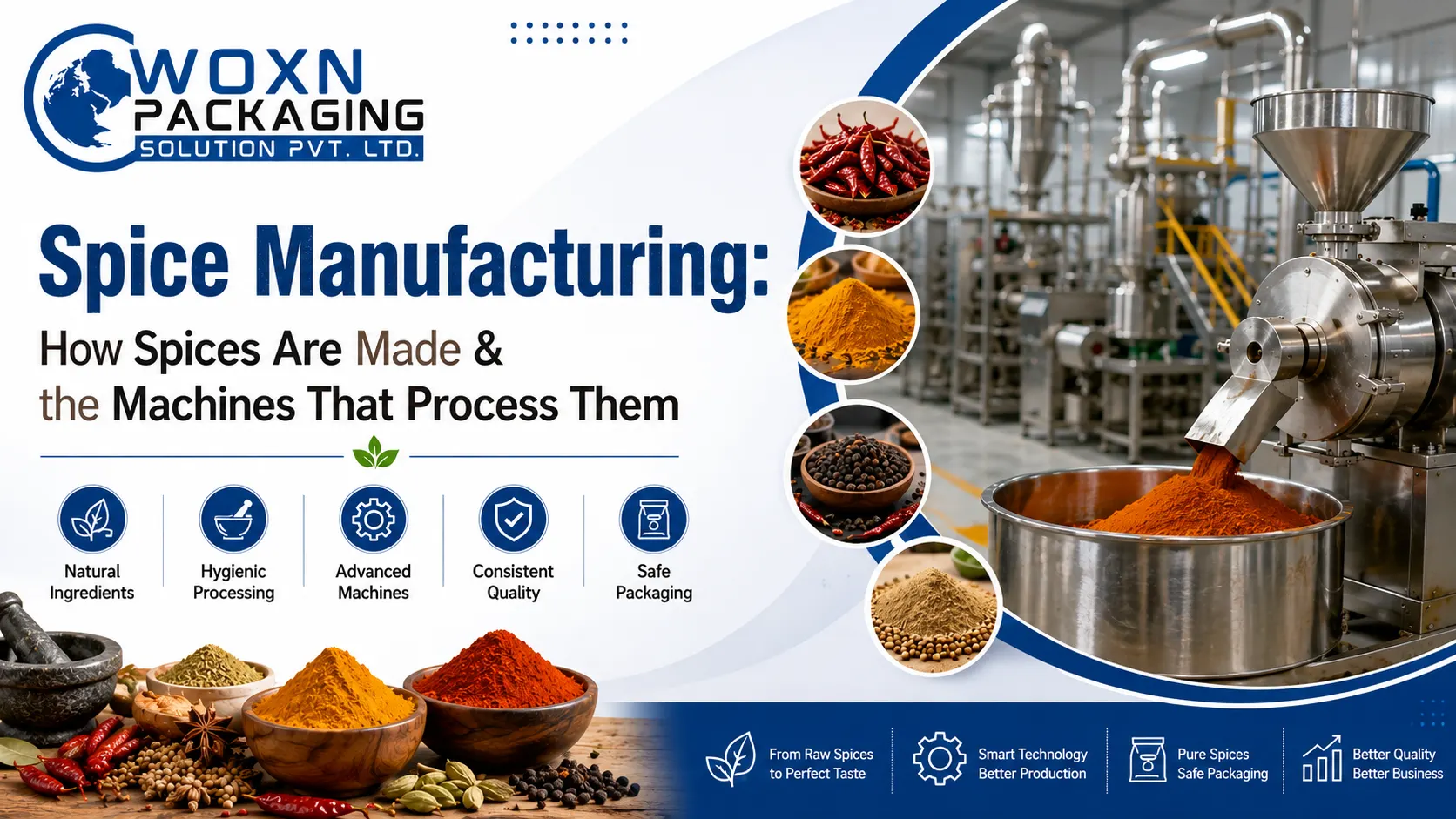
A modern spice powder processing plant may include different machines for cleaning, grading, grinding, mixing, conveying, and packing. The exact configuration depends on the type of spices being processed and the required production capacity. Small businesses may need a basic setup, while large commercial manufacturers may require an integrated and automated processing line.
How Are Spices Made
The process usually begins with the selection and procurement of raw spices. These may include turmeric, coriander, cumin, chilli, black pepper, cloves, cardamom, fennel, cinnamon, and many other ingredients. The raw materials are inspected to remove unsuitable or damaged material before further processing begins.
The major stages of spice manufacturing generally include:
1. Raw Material Selection
The quality of the finished spice product begins with the quality of the raw material. Manufacturers select suitable whole spices based on factors such as appearance, aroma, cleanliness, and moisture condition. High-quality raw materials can help produce a better final product.
2. Cleaning and Sorting
Raw spices may contain dust, stones, husk, stems, metal particles, and other unwanted materials. Cleaning equipment is used to separate these impurities from the spices.
Depending on the product and processing requirement, different cleaning machines may be used. These systems help improve hygiene and prepare the material for the next stage of processing. Sorting is also important for maintaining product quality. Unwanted particles or damaged spices can be removed to achieve a more uniform final product.
3. Drying and Moisture Control
Proper moisture levels are important in spice production. Excess moisture can affect the grinding process, storage life, and quality of the finished powder. Depending on the raw material and processing method, spices may be naturally dried or processed using suitable drying equipment.
Controlled drying can help prepare the spices for efficient grinding. Proper moisture management is also important for reducing the risk of product deterioration during storage.
4. Roasting or Pre-Treatment
Certain spices may undergo roasting or another pre-treatment process before grinding. This can help develop flavour and improve processing characteristics. The roasting conditions must be carefully controlled because excessive heat may affect the natural aroma and quality of the spice.
Not every spice requires roasting. The processing method should be selected according to the type of spice and the desired final product.
5. Grinding the Spices
Grinding is one of the most important stages in spice manufacturing. Whole spices are processed into powders of the required particle size using suitable grinding machines.
The type of grinding system may depend on the material being processed, required production capacity, desired fineness, and heat sensitivity of the spice. Excessive heat during grinding can affect aroma and product quality, so an appropriate grinding process is important.
6. Sieving and Grading
After grinding, the spice powder may pass through a sieving or grading system. This process separates particles according to the required size and helps maintain product uniformity. Sieving is particularly useful when a manufacturer requires a specific powder fineness. Larger particles can be separated for further processing where required.
7. Blending Different Spices
Many popular spice products are made by combining several ingredients in specific proportions. Products such as garam masala, chaat masala, curry powder, biryani masala, and other blended seasonings require accurate mixing. Woxn Packaging can offer suitable solutions for businesses that require efficient processing and packaging of spice blends.
8. Packaging the Finished Product
Packaging is the final and highly important stage of spice manufacturing. Spices must be packed properly to protect them from moisture, dust, contamination, and loss of aroma.
Modern packaging machines can support accurate filling, sealing, and efficient packing. Proper packaging not only protects the product but also improves shelf presentation and strengthens brand identity.
Machines Used in Spice Manufacturing
A complete spice production setup may include different machines based on the type of spices and the required production capacity. Some of the commonly used machines include:
- Spice cleaning machine
- Destoner machine
- Conveyor system
- Dryer
- Roasting machine
- Spice grinding machine
- Pulverizer
- Sieve or grading machine
- Ribbon blender
- Powder filling machine
The combination of machines depends on the scale of production. A small business may begin with basic processing and packaging equipment, while large commercial units may require an integrated and automated production line.
Importance of Quality Control in Spice Production
Quality control is essential throughout the manufacturing process. From raw material inspection to final packaging, every stage should be monitored carefully. Manufacturers need to maintain hygiene, control contamination, and ensure that the product meets the required quality standards.
Important quality factors may include:
- Raw material quality
- Moisture content
- Particle size
- Colour and appearance
- Aroma and flavour
- Product cleanliness
- Accurate blending
- Packaging quality
A well-organized manufacturing process can help businesses maintain consistent products and build customer trust.
Why Choose Woxn Packaging?
Woxn Packaging understands the practical requirements of food processing and packaging businesses. We offer suitable solutions for manufacturers looking to improve their spice processing and packaging operations. The right machinery can help increase production efficiency while supporting better hygiene and consistent product quality. Modern spice production requires a balance between efficient machinery and proper process control.
Woxn Packaging offers practical machinery and packaging solutions designed to support the needs of modern spice manufacturers. With the right processing equipment, proper quality control, and effective packaging, businesses can deliver flavourful and hygienically packed spice products to the market. As the demand for packaged spices continues to grow, investing in efficient processing and packaging technology can help manufacturers improve productivity, reduce manual effort, and maintain consistent quality from raw spice selection to the finished product.